Category Archives: Uncategorized

What do people see when they look at ads?

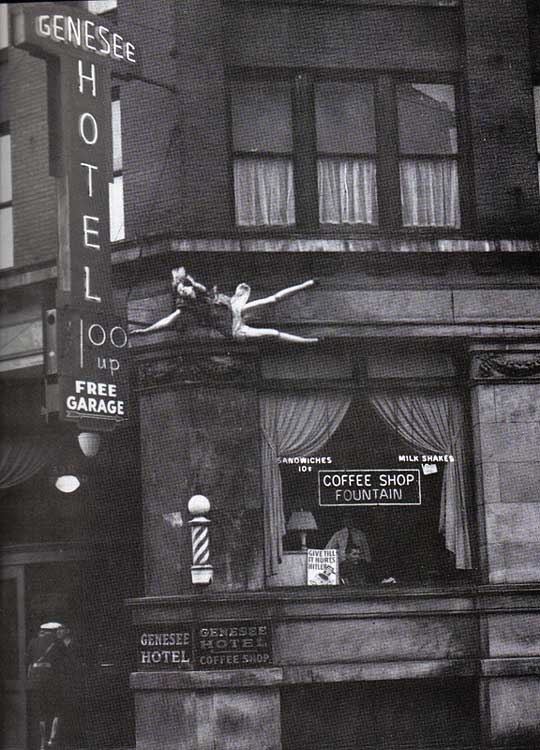
Not necessarily what they’re supposed to, as this very cool experiment seems to suggest. Thanks to The New Shelton Wet/Dry blog for finding this fascinating (appalling?) piece of research.

In a rigorous controlled study 52% of the people who were asked to look at this picture could not recall the woman falling to her death.

For every creative who ever fought tooth and nail to keep the composition of his ad just so—which is to say, all of us—this is sobering stuff.

Take these pretty nice lingerie ads, courtesy of AdGoodness, for example. Here’s one, if you’re too lazy to click:

It’s all about controlling the viewer’s eye and directing it to a particular, uh, place.

But what if the headline has it all wrong? What if the viewer remembers only the Tyrannosaurus? Or only the zebra rug?

And we’re arguing about the placement of the logo?

Brands come and go, but "Blade Runner" still rocks.

I saw the newly-released “Blade Runner” this week.

Gone is the stupid narrative VO and hilariously inappropriate happy ending.
What remains, remastered and gorgeous, is Ridley Scott’s vision of the near future.

And a big honking Pan AM logo glowing through the murk in the evening LA sky.

“Blade Runner” has a lot to say about the fragility and impermanence of life. And, maybe, of brands.

Post-pitch

Yesterday was the finale of a 3-month pitch, the full-on gantlet type: detailed RFP, “chemistry” meeting, interim working meeting, and the ultimate presentation to the CEO and her courtiers.

It was good. Real good. Smoke-a-cigarette-after good.

I quit cigarettes 23 years ago, so this post and its musings will have to do.

Honestly—is there anything better than a clean brief and no process except kick as much ass as you can in the time allotted? Pitches—especially those where agencies are asked to do spec creative—are fubar in many ways, and everyone whinges about it at 4As meetings and such. But looked at another way, it’s what we do in its purest form, and at no point in the agency-client relationship is it going to get better.

And being a principal in a small agency, and having a partner who knows what he’s doing, I know we can leave it all on the field and make some other agency beat us.

I worked at two large agencies where that wasn’t the case.

At both places, there would be this moment at the end of pitches that I dreaded: the CEO Takes Off His Reading Glasses and Stands Up Moment. Otherwise known as the If You Just Shut the Fuck Up We’ll Win This Moment. Where in 5 minutes of pointless bloviation, the guy would demonstrate that a) he hadn’t seen the work or thought about the prospect’s business until right before the presentation; and b) would in all likelihood continue at that level of involvement going forward. And months of work and 2 hours of great presentation would go down the drain.

I don’t know if we’re going to get this business. I think we should. But I’ll have no regrets if we don’t. I think I’m going to go walk the dog now. And smoke a cigar.

Cultural Alzheimer’s?

The old cliche is that those who do not remember history are condemned to repeat it.
In world affairs, the consequences are usually tragic. In advertising, they’re more often inadvertently hilarious.

Last night I heard Electric Light Orchestra’s “Hold on Tight to your Dreams” emanating from the TV and I thought, “What the fuck! The National Coffee Association is back on air?”

Because for those of us whose memories stretch back that far, that music is inextricably tied to a cheesy effort to make coffee hip. It was in the pre-Starbuck ’80s when coffee sales were tubing and an entire generation was chugging cola for breakfast.

Except now it’s the sountrack for the advertising for the new Honda Accord, which is a pretty good looking car from a pretty classy brand and now there’s a sonic layer of cheese all over it.

At least in my mind. But here’s my question: are the creators (and approvers) of the Honda work…
a) oblivious to the music’s prior advertising life?
b) aware but don’t care?
c) ironically commenting on it in some meta way that’s beyond my comprehension, like sampling crap 70s pop songs in rap beats?

Freelance Envy

I had a bout of Freelance Envy recently, having brought in a team for a project I was just beyond the beyond-o on. They did their thing (very well, I might add), dropped off the files and their invoice and said the magic words, the words only freelancers get to say:

“Here you go. Hope you like it.”

I never had the intestinal fortitude to go freelance full time. Waiting for the phone to ring while writing out mortgage checks was just not something I could handle.

There was a brief period years ago while I was “exploring other opportunities” as the press release put it, when I did freelance, and boy, was it fun. It was good money, too, but honestly, if it weren’t for those pesky mortgage checks, I would have done it for free.

Think about it: an agency pulls freelancers in for only two reasons: 1) they’re short-staffed and the client’s freaking; or 2) the people on staff (or the last batch of freelancers) couldn’t crack it and the client’s freaking. Either way, the agency is desperate and at least temporarily open to a new take on things.

Not coincidentally, those are the optimum conditions for creating great work. Add to that the fact that you don’t have to deal with internal politics or client comments, and it’s a pretty sweet gig. You’re the Gunslinger. You come into town, take care of business, and ride off into the sunset.

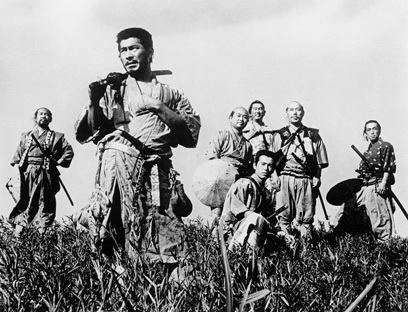
But then two nights ago The Seven Samurai was on TV and I thought about those master-less ronin, with nothing but their swords and their honor as they wandered from gig to gig, and thought about all the great work freelancers do that wind up as meeting fodder, or with some other jackass’s name on it for the award shows.

That’s the flip side of “Here you go. Hope you like it.” And it is no small price to pay for freedom.

Ideate this.

I love the new IBM commercials that riff off the stupid jargon infecting the process of coming up with new ideas. One part New Age hooey, one part consultant corporate babble, one part Dr. Phil “everyone’s got a good idea” faux-empowerment, it’s all captured beautifully in this campaign.

Here’s my question: how many people within IBM (those good ol’ “internal stakeholders”) looked at these ads and didn’t get the joke? IBM, like most other big companies, especially in tech, can ideate with the best of them.

A cursory look through IBM’s website uncovered the following subjects:
“Expanding the innovation horizon”
“Drive strategic change”
“Transform your workforce”

That’s halfway home on Bullshit Bingo, the way I play it.

By the way, if you’ve never played it, pick up your score cards here.

Please, no more:

Plink-plinky pseudo-Phillip Glass piano scores that are supposed to signal “thoughtful.”

Question-themed copy. Don’t ask me where I want to go, what I want to do, what my dreams are, what I’m working for.

Sales “events.”

Drawings layered onto photography meant to suggest “possibility.” Sprint: haven’t you seen the Microsoft spots?

Looking off-camera when you’re supposed to be looking at me. Sam Waterston (and Bob Giraldi): I’m talking to you. I’d look at you, too. if you were here.

Vodka commercials filmed on yachts not tied up in the marina. If you want to get drunk and be a danger to others on the water, get a Cigarette boat.

In case you were considering a career in advertising…

…take a long hard look at this article from last week’s NYT magazine:

It’s an Ad, Ad, Ad, Ad World – New York Times.

Especially this part:

“The plan is to build a global digital ad network that uses offshore labor to create thousands of versions of ads. Then, using data about consumers and computer algorithms, the network will decide which advertising message to show at which moment to every person who turns on a computer, cellphone or — eventually — a television.”

You thought globalization was only about customer service reps and toys made out of lead? Think again!

I don’t know what’s worse–exploiting cheap foreign labor to crank out endless versions of ads that suck in the first place; or the idea of being replaced by an algorithm. It’s not just media planners who should find this prospect frightening. Art directors, writers, planners, we’re all grist for the mill.

I’m a short-timer. A few more years and I hang up the spikes. So this shit won’t come down on me. But for people coming into the business, it’s a whole new reason to march at the next G-8 summit.

The other 28 and a half seconds were just copy mandatories anyway.

Engaging at Any Speed? Commercials Put to Test – New York Times

It’s hard to believe this article and the people and activities in it aren’t a goof. Desperate media sales types trying to prove that 30 second commercials mashed by a DVR into 1.5 seconds of ultra-high speed gobbledegook still work?

Anyway, is it just us old farts that remember the first appearance of these little nuggets circa 1987 in Max Headroom? They called them “blipverts” then, and they had the unfortunate effect of blowing the viewer’s head to pieces. Too much data in too little time, apparently.

That wouldn’t be a problem now. Most current spots are so content-less, you could condense 100 of them into a nanosecond and you’d still be safe.

It’s all a blur.

Marketers Struggle to Get Folks to Stay Put for the Commercials – New York Times

The whole goal here is to blur the line between content and advertising message,” said Hank Close, president for ad sales at MTV Networks.”

Listening to a media-sales executive exult that his network’s goal is to completely blur the distinction between content and advertising is like listening to a tobacco-industry executive talking about how cigarettes are nothing more than an optimized nicotine-delivery system.

The difference is, the tobacco guys were talking behind closed doors. This guy’s Tourette’s-like outburst was freely directed at the press.

Every time the firewall between advertising and content is torn down, it ends in tears.
The GEICO cavemen kicked ass in commercials. Advance sneak peaks at the TV series suggest it won’t last 2 weeks. Ham-fisted product placement eventually made series like “The Apprentice” and “Queer Eye” unwatchable. Ad guy Brian Tierney’s takeover of the Philadelphia Enquirer is headed down the same dead-end street.

The same technology that empowers viewers to fastforward past crap commercials also lets them post the good ones on YouTube and leverage the client’s media buy by orders of magnitude. The challenge, Mr. Close, is not to pollute content with badly disguised ad messaging, but to make ads that merit watching.