Category Archives: Uncategorized

Dogs rule. BMWs suck.

So I’m watching the Westminster Dog Show, which, given the…um..specialized nature of its audience, has lots of commercials featuring dogs.

Most of these commercials are for Pedigree, and they’re great. Of course, when the brief is to encourage people to donate to a dog-rescue fund, and the audience by definition loves dogs, if you can’t do a nice spot you should just give it up. Dogs rule, indeed.

And then this BMW spot comes on. Guy whistles for his Weimariner to go out for a spin. Dog looks dubious. Dog exits frame, reappears wearing a crash helmet. Now he looks dubious and ashamed. Against his better judgment, dog hops into back of BMW wagon. Guy stomps on the accelerator, hurling his dog against the rear windshield as he peels out of the driveway.

Nice creative choice to run on a dog show, guys. Note to dogs waiting for new owners in shelters: if someone comes in and jangles BMW keys at you…bite him. You’re better off where you are.

Super Bowl Bench Warmers

I think the big winners and losers have been pretty well documented, don’t you?

I’m sickly drawn in this post to the ads consigned to Purgatory, neither praised nor derided. I’m fascinated by the forgettable. If you’re going to pay $2.5 MM to air a spot, at least try. Take a shot. Fail Big, like Snickers or Garmin. But no. Anyone remember these?

Ford F 150. Lots of parts coming together to make…um…a truck. Like Honda’s “Cog” with all the coolness stripped away.

Prudential. Rocks are good for skipping. Rocks are good for massage. Rocks are good for…let me guess…I feel it coming…insurance.

Ford Edge. Let’s see, the vehicle’s name is “Edge” so let’s have it ride (in clumsy CGI) on the edge. And have some rocker sing “I like to live on the edge.” Which means, of course, that he doesn’t.

And my grand prix for Forgetability, the least remembered, least-talked about spot on the Super Bowl:

PNC Bank. They ran the pitch mood piece. Aimless vignettes of people walking, children smiling, people tapping on keyboads…what–you don’t remember? What about when the AVO talked about helping you meet your goals and your dreams? No? Surely you remember the line at the end:

PNC. Leading the way.

I did. Which is deeply troubling.

Taking it to focus groups. That’s the hard part.


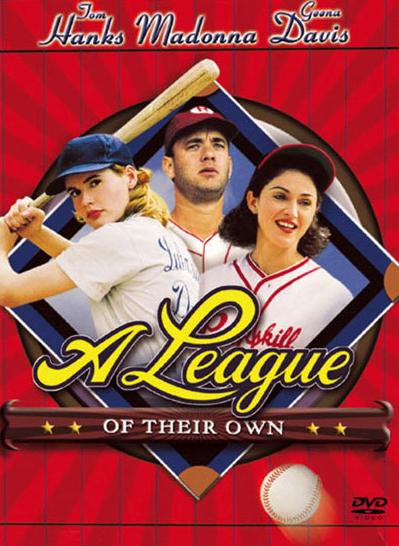
You know that scene in “A League of Their Own” where Gina Davis decides to hang up her cleats after hubby Bill Pullman comes home from the war? Where she tells Tom Hanks that playing pro baseball was just too hard? Hanks looks at her in disgust and says “It’s supposed to be hard. If it was easy, everyone could do it.”

Well, I just took a look at the 5 final “consumer-generated” Doritos spots for the Superbowl, and you know what?

Apparently, everyone can do it. As George Parker pointed out, these are not bad spots. (Well, “Live the Flavor” is a pretty bad spot but the other 4 are pretty good.)

And as any number of people have pointed out (and others, including me, predicted), the people who created them are not exactly amateurs. They are art school students, aspiring filmmakers etc.

But as I watched the spots, I was struck by something else. These spots were not only pretty professional-looking, they all had the distinct feel of Superbowl spots…that sort of BBDO/DDB jokey-hyerbolic comedic style. The guy who duct-tapes his roommate to keep him away from the bag of Doritos. The rock climber who loses his grip because he’s clutching a bag of Doritos.

This is old school TV creative. Not bad. But not new. If you showed it to David Lubars he’d kick you out of his office. And this is the future of advertising? Having people who are trying to break into the business do work none of us would view as fresh?

Age and Advertising, Part Two

Literature is strewn with examples of writers creating and inhabiting characters totally unlike themselves. James Joyce’s Molly Bloom… Michael Haddon’s autistic Christopher Boone… characters like these are so convincingly wrought, they stand as feats of pure imagination.

And then there’s advertising.

Walk around any creative department and it’s 1955. Women (and gay men) work on cosmetics. Men work on cars. Young men work on beer. Middle-aged creatives, what few there are, are in management or herded off to work on pharma.

Defenders of this caste system invoke the “Write about what you know” approach, saying (if not necessarily believing) that creatives whose age and gender mirror the target group will have better “insights” that “resonate” at a deeper level.

Excuse me, but how insightful do you have to be to introduce a new stuffed-crust pizza? And anyway, aren’t the “insights”–so hard-won in endless rounds of focus groups—already there on the brief?

Off the record, agency managers will tell you that client comfort has a lot to do with it too. I have a very good friend who lost her job working—of course—on a feminine hygiene product account when a new client decided she was too old.
Talk about double jeopardy!

Let’s suppose, just for a moment, that casting by age for different types of accounts makes sense. Let’s say you have the Red Bull business. Do you really want a 50+ creative working on it? Speaking personally, there’s no part of my life that requires knocking back a lethal shot of caffeine at 2 AM. None. The only thing that’s going to give me wings at this point is going to the Hereafter.

So fine: to work on a young person’s product it sometimes helps to be young. But now let’s turn the question around. To work on an older person’s product, does it help to be older?

This is where things get fucked up. Because the typecasting only runs in one direction. No one has a problem with a 28-year-old creative working on life insurance, cognac, luxury sedans or (women only please) wrinkle cream. But maybe they should.

Just as there are ads—I’m sorry, I mean branded consumer engagement content—that are totally five minutes ago for their 20-something target, there are also ads that are hilariously wrong for their 55-year-old customer.

Here’s a good rule of thumb:

If you are someone who still sees a role for Red Bull in your life, you have no insight into life insurance.

The plant tour


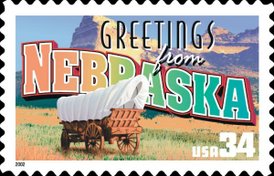
Yesterday I got on my client’s corporate jet and flew to Nebraska to take the plant tour, thereby violating Fenske’s Anti-Law #9.

What can I say? Private jets are fun, even when you’re going to a factory in Nebraska in January. It’s like my children, when they were little: they thought the coolest part of any trip, whether it was DisneyWorld or the Berkshires or LA, was room service.

Clients like creatives to take the plant tour because there’s the possibility they’ll see something there to inspire them creatively; also maybe because they secretly delight in seeing smartypants hipsters so far out of their comfort zones. But the truth is, beyond a certain point, additional knowledge about how a product is made isn’t usually helpful. It either bores people or tears away their illusions (e.g., hot dogs).

Still, spending a day with people who live outside the irony zone and care to an incredible degree about making the best product they can, can get a guy pretty motivated about making ads, so going on the plant tour accomplished its goal, if not in the way the client intended.

Embedding an idea in shit doesn’t make it viral.

Bad ads get ignored.
Good ads get noticed.
Great ads go viral.

And they always have. The difference is, people used to say “Did you see that commercial last night?'” and now they just put it up on YouTube.

The Dove transformation spot would have been talked about and shared 20 years ago.
“Where’s the beef?” would be getting a zillion hits on YouTube if it had debuted last week.

Either way, a meme is replicating itself through the culture. Same process, new petri dish.

What I learned from the 2006 CA Advertising Annual

The Communication Arts Advertising Annual arrived yesterday and I fell upon it eagerly. Here is what I’ve learned:

1. If you want to do award-winning work, move to Singapore.

2. Everywhere but in the US, board games appear to be the most heavily advertised consumer product. That or Legos.

3. Contrary to what your account supervisor told you, 4-color spreads make good sense and are affordable for every client, regardless of budget.

4. A new agency can get into the CA Annual executing the old agency’s campaign (see pages 30 & 66).

5. Procter & Gamble can and will buy great work (Tide to Go, Cascade).

6. They will also buy incomprehensible dreck (Folgers) if you let them.

7. Radio is (and maybe always will be) your best shot at winning.

8. If there are no jobs in Singapore, move to Bangkok.

Change agents and the agencies they love.

If you’re going to flush your career down the toilet, are you really going to do it for this guy?

Just because he has an Aston Martin doesn’t make him Sean Connery. No matter how many cups of Nobu’s house sake you’ve downed.

Wal-Mart Fires Marketing Star and Ad Agency – New York Times

Arts and Crafts

Enough about art.

I’m here to talk about craft.

Not the Martha and her hot-glue gun kind of craft.

Or those dreadful outdoor fairs filled with stained-glass wine coasters and Labrador retrievers made out of macramé.

No, I’m talking about the look-how-beautifully-everything-fits-together kind of craft.

The first-you-make-the-sushi-rice-for-seven-years-and-then-you-can-slice-the-fish kind of craft.

And my point is that while a few ads do legitimately aspire to the level of art, craft is what keeps hundreds of ads every year from outright sucking.

Say “craft” to many in our business and the image that comes to mind is the prima donna sociopath, endlessly re-kerning type while the traffic manager flips out. If there’s someone like that at your agency, he may or may not be an artist. But he’s not a craftsman.*

Real craftsmen have a smoothness, an economy of thought and movement, that tempers their obsessive attention to detail. “Measure twice, cut once,” as the carpenter’s maxim goes.

Here are some other differences between art and craft:

Artists want—no, need– their creation to be new and original.

Craftsmen have different, more immediate worries. Is it well-made? Is it honest? Does it work? Will it wear well?

The joy of art is in the conceiving and the beholding. The joy of craft is in the making.

Artists sign their work. Craftsmen do their work, and if they do it well and long enough, the work itself becomes a calling card.

Art is high-maintenance. Who does the maintaining? Craftsmen.

Art concerns itself with Big Things. Craft is democratic. Small-space trade ads, national TV campaigns, they all are things to be crafted. And if anything, the craft shines more brightly in the dark recesses of the obscure trade journal than in the glare of prime time.

Because, let’s face it, not a lot of people notice.

Only stubborn pride in craft compels an art director to slave over all those nasty titles in the Summer Sales Event spot so they come out clean and graphically coherent.

Meter, rhythm, syntax—if they’re in that bank-ad body copy at all, it’s because a craft-obsessed writer put them there.

That’s why, if I were a client, and I had to choose whether artists or craftsmen worked on my business, it would be such a no-brainer. It’s like asking a homeowner about to do a major addition whether he’d rather have Frank Gehry or Norm Abrams from “This Old House.”

Hell, I bet even Frank Gehry would rather have Norm.

*Apologies upfront to female practitioners. Craftsperson? Craftswoman? The language hasn’t caught up to the reality of your skills.
Age and Advertising, Part One

I had a boss early in my career who framed the age-and-advertising issue perfectly. His theory was that as you got older, particularly in the creative end of the business, you encountered two stages of eyeball-rolling from the young people in your office:

Stage One: They wait until they leave your office to roll their eyes.
Stage Two: They don’t.

The goal, he said, was to get out of the business before things had progressed to Stage Two.

Stage One is something you learn to live with if you’re going to manage creative people. If you can’t endure the fact that killing the creative team’s wild-posting-on-urinals campaign earned you a huge eyeball-roll the minute they left your office, you can’t be a creative director.

But now I’m roughly the age (mid-fifties) that boss was when he broke it down for me. Many of my friends in the business have gotten the boot for age-related reasons. I make cultural references that produce blank looks on the faces of 20-somethings. Am I approaching Stage Two?

And if I am, what does that mean?

Do creatives lose it as they get older? Certainly, if you look at the award shows, most of the most innovative new work comes from younger creatives. From this, it’s easy to conclude that creativity, like gray cells, muscle mass and hair, is something that just ebbs away over time. And certainly there’s nothing sadder than watching an older creative trying to recycle past work to solve a new assignment. (I’ve seen guys in their 20s pull that crap, too. The only difference is they have a smaller supply to draw on.)

But is it really true? It’s hard to know. For one thing, there are simply far more creatives in their 20s and 30s than in their 50s. There are more because everyone likes it that way. Agency management likes it that way because younger creatives are cheaper. Creative directors like it that way because the rosy glow of youth freshens their own older vibe. And clients like it that way because, godammit, we need some fresh thinking around here. With the ranks of creative departments so tilted towards youth, statistics work in their favor. Their sheer numbers mean they do most of the really good work. Of course, it also mean they do most of the really bad work.

Are older creatives less willing to try new things? That’s certainly the rep, but again, it’s not clear whether this is just perception becoming its own reality. In most agencies, “give it to the kids to work on” is the automatic response when traditional solutions won’t do.

But in my own experience, the opposite often happens. The kids, being new to the game and having no sense of what’s gone before, often wind up recapitulating the history of advertising in their own explorations. (And since life is basically unfair, pointing out that they have—totally accidentally, of course—come up with an idea first done in 1977, just makes me more of a loser. Cue the eyeball roll. Not that I’m bitter or anything.)

Whereas the older creatives I know are desperate to do something totally different because they’ve been forced back into traditional solutions their entire careers. They also have the advantage of actually knowing what’s been done before.

Who do you suppose more appreciates having the door to the cage opened—the newly hatched chick or the bird that’s been there all its life?

Next installment in this discussion (not necessarily the next post): Do you have to be young to write young?