Just the facts, please.

Maslow? Who the hell is Maslow?


Let me describe a TV commercial.

It doesn’t have much of a storyline. Not a lot of human presence. No punchline. No surprises. The visual approach is matter-of-fact. It’s basically just a string of demos, with many tight shots of the product and a voiceover describing the product’s functions and uses.

I could be describing a commercial for Bounty paper towels. Or a late-night DM spot for a kitchen gadget. But in fact, I’m describing the current spot for the Apple iPhone 4S.

It’s no small irony that many of the same creatives who worship at Apple’s altar would gag at the thought of writing an ad entirely focused on demonstrating a product’s unique features and benefits. But in fact, that kind of advertising has been the bedrock of Apple’s branding since the beginning. Everyone remembers “1984” and “Think Different,” but in reality, both of those spots were outliers: gauntlets thrown down at two key inflection points in the company’s history.

Far more typical was the introductory advertising for the iPod,  a 30 second demonstration of a guy listening to a piece of music, transferring it to his iPod and dancing his way out the door with it. The line: “1000 songs in your pocket.” That’s a collection of words any P&G brand manager from the 1950s would recognize and embrace. And it stands in stark contrast to the Maslow hierarchy drivel that passes for insight in so much current work: Be you. Be more. Life life to the fullest. Write your story. See life in HD. Chase what matters.

No good advertising comes out of this disingenuous emo crap. None. Never has. The great DDB Volkswagen ads? Demos. Ally & Gargano’s Fedex work in the 80s? Demos.  “Got Milk?”? Wonderbra? Mini? Demo. Demo. Demo.

It is an axiom of our business that no one is as interested in the product being advertised as the advertiser himself. In fact, the starting assumption for most creatives is that most people couldn’t care less. If this is what you believe it’s easy to be seduced into your agency planner’s higher-order benefit nonsense. My advice: stick to the facts.

The ad that should have run today.

Money talks. Bullshit walks. And if any brand needed building right now, the United States of America would be it.

You say goodbye. I say hello.

The Thursday before Memorial Day weekend one set of doors closed and another set opened. Phone and internet carried over with nary a hiccup, no deadlines were missed, no clients inconvenienced.

Right now the new space still feels tingly and unexplored, more possibility than reality. I know familiarity and comfort will come. I hope they don’t come too soon.

Nonvertising

This was a Pizza Hut
Now it’s all covered with daisies
you got it you got it

–Talking Heads, “(Nothing but) Flowers”

What is the future of advertising?

Here’s an idea: reward customers by relieving them of the burden of seeing ads. It’s based on the not-particularly brilliant insight that most people avoid advertising if they can. So if you’re a marketer and you’re trying to forge bonds of loyalty with your customers, why not give them what they want: nonvertising.

Here’s how it works. Let’s say you’re Coors Light. And let’s say you’re on track to hit your numbers for sales and profitability. To thank your loyal customers, you give back the 8 minutes of time you bought on the NFL game of the week. You don’t sell it off to another advertiser. You give it back to the customer and tell them you did so.

Conversely, if sales or share starts to slip, the advertising returns. And your target is made to see inane re-edits of NFL coach press conferences until he puts down that Bud Light and locks and loads the Silver Bullet instead.


This, of course, is the exact opposite of what advertisers do now. As their market share goes up, brands tend to increase their ad spending. This, ultimately, becomes counter-productive because–did I mention?–people don’t like advertising.

Nonvertising is already happening at the margins. It just doesn’t have a name yet. Think about when your local NPR station does its fundraising drive. They tell you before it starts: cough up your contribution and if we get enough money we’ll cut the fund drive short by a day. Ira Glass and the Car Talk guys know you don’t want to sit there and hear them yammer about public radio’s funding shortfall and the big bad Federal government meanies. And they leverage that fact to their benefit–and ours.

Another example: ad-free “premium” versions of websites like Pandora. You want a clean, clutter-free environment? Pay for it.
Now this isn’t a perfect analogy because the advertiser has no say (and no upside) in whether the customer is subjected to his ads or not…it’s between the site and the user. But still, the basic thinking is the same: use your customer’s desire not to be bombarded with ads as a way to increase traction.

There’s a lovely old science fiction short story by Frederik Pohl called “The Midas Plague.” Written in the 1950s, when post-war American prosperity was really ramping up, it imagined a time in the not-too-distant future when the greatest challenge society faced was material over-abundance. If people didn’t consume in large enough amounts, at a fast enough rate, the wheels of commerce (which in those days largely meant manufacturing, of course) would grind to a halt. In this future, our notion of wealth and poverty was turned on its head. The poorest people were saddled with the most material goods. Their lives were a constant grind of purchasing and consuming, played out in enormous gilded palaces and huge cars. Those at the apex of society, on the other hand, had the means to avoid this misfortunate, and lived in the luxury of austere simplicity.

Now substitute “advertising” for washing machines, lawn mowers and color TVs, and you have the world the way it is (or at least, America the way it is): the well-to-do watch PBS and TV on demand, drive through streets lined with trees, not billboards, and listen to satellite radio in the car. Their Macs are a shimmering expanse of aluminum, 100% decal-free. They prefer environments and media with few or no ads, and pay for the privilege.

Advertising does not suffer from lack of efficacy. It suffers from too much muchness. Brands that figure out how to lessen that, in a way that customers can identify with that brand, stand to benefit greatly.

Something in the water.

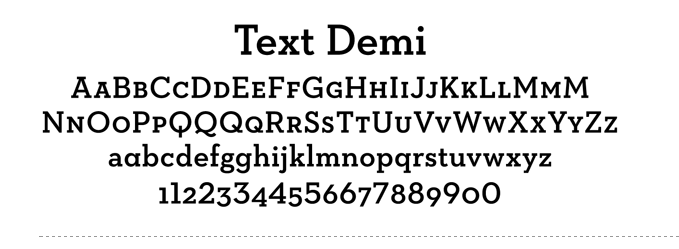
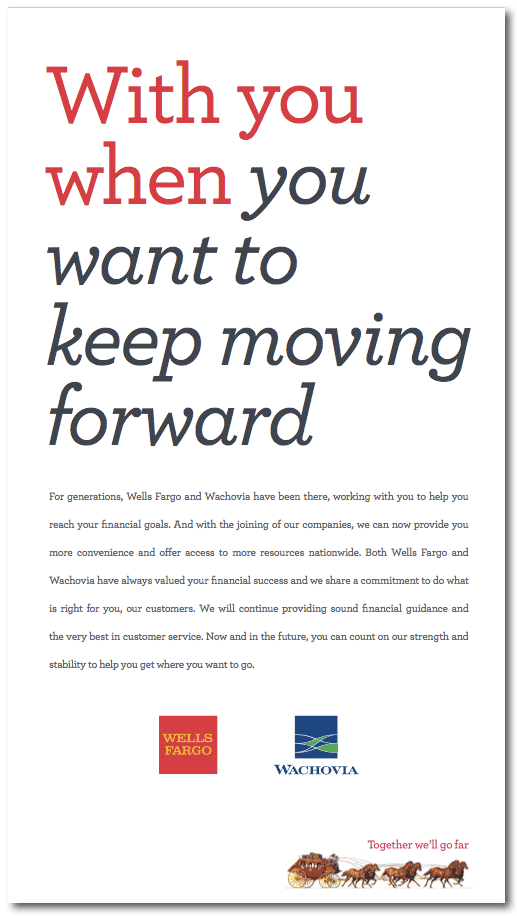
These are versions of a font called Neutraface. Look familiar? They should. The Neutraface font family was introduced in 2002 and has increased in popularity every year since then, with 2009 being some kind of tipping point. Now you see it everywhere. Here’s an ad currently running for Wells Fargo:

That’s Neutraface slab in Roman and italic. Here’s AT&T Wireless:

Neutraface demi text italic.

Between these two brands alone, Neutraface probably has north of $200 million behind it.

Why am I geeking out about a typeface? Because type is one of those unseen forces that shape fashion in graphic design and advertising. Back in December, I wrote about how it is that ads wind up looking like other ads, often in unrelated categories to different audiences. I touched on factors as lofty as parallel evolution and as banal as common thievery and client dictate. But the fourth factor, which I called “something in the water,” I left for a later post. Well, type is something in the water. You toss it in, everyone drinks it and in a couple of years, art directors everywhere are showing the symptoms.

Color is another unseen hand. Every year Pantone and a few other influencers decide what the on-trend colors for the next year will be and everyone from fashion designers to paint manufacturers to designers take a swig. Here’s this year’s color, by the way:

Honeysuckle. Bet you didn’t see that one coming. But now that you know, keep your eye peeled. You’ll be amazed how often you see it.

A last thought on this subject (for now): how many adjoining boxes containing type, background colors and artwork did you see in ads before Quark, with its text and picture boxes, appeared in the mid-90s?

Tina Fey, Creative Director

I guess even people who write (hilariously) for a living need a writing outlet and lately Tina Fey has chosen The New Yorker as hers.

In last week’s essay, entitled “Lessons from Late Night,” she talks about things she’s learned from Lorne Michaels about managing creative people; and while I’m sure neither Miss Fey, Mr. Michaels or anyone who’s ever been on SNL means advertising writers and art directors when they use the term “creative people,” the lessons were fantastically apt.

Ipad technology, subscription firewalls and a healthy fear of intellectual property lawyers keep me from linking you directly to the article, but let me quote one especially insightful passage and then recommend you pony up for the real deal, in print or in Conde Nast’s beautifully designed app. Here, the first thing Tina learned from Lorne Michaels: producing is about discouraging creativity.

A TV show comprises many departments–costumes, props, talent, graphics, set dressing, transportation. Everyone in every department wants to show off his or her skills and contribute creatively to the show, which is a blessing. You’re grateful to work with people who are talented and enthusiastic about their jobs. You would think that in your capacity as a producer ylur job would be to chum up creativity, but mostly your job is to police enthusiasm. You may have an occasion where the script calls for a bran muffin on a white plate, and people from the props department show up with a bran cake in the shape of Santa Claus sitting on a silver platter that says “Welcome to Denmark” on it. “We just thought it would be funny,” they say. And you have to find a polite way to explain that the character is Jewish, so eating Santa’s face might have negative connotations, and the silver tray, while beautiful, is creating a weird glare on camera, and maybe let’s just go with the bran muffin on the white plate.

R.I.P.

Most Deadheads are familiar with this logo. Few knew its provenance until the Owsley obits started coming out yesterday. Fewer still (including, at this point, me) knew the nickname came from early-onset adolescent hairiness. From such random beginnings do brands grow.

Well met in Hell.

Even when a site’s only reason for being is to aggregate and sell eyeballs by pimping stories to Google search bots, it can create a strange beauty. Here, a screen grab from HuffPo a few hours ago: